
Your Nervous System Is Overloaded
Chronic stress. Constant pressure. No relief. Your cortisol is elevated. Your nervous system is stuck in "threat mode." These tools reset your system and restore the calm you need. Not wishful thinking. Not fluff. Real, practical nervous system regulation.

Your Stress Toolkit
Interactive tools you can use right now. No signup, no gatekeeping. Just show up and do the work.
Tools That Work in Seconds
You're overwhelmed. Your mind is racing. You need relief now, not in an hour. Tell us how you're feeling, and we'll guide you through the tool that works best for you. Each tool activates your nervous system's calm response—guaranteed to help within seconds.
What are you experiencing right now?
Select how you're feeling to get tool recommendations that work right now
Your Nervous System: Explore How It Works
Click each nervous system state to understand what's happening in your body. You can't manage stress if you don't understand what's happening. Here's the real story.
What Triggers This State?
Your baseline when you're functioning well
What Happens in Your Body?
60-80 bpm
Normal levels
Engaged
You can choose your response
Working normally
Natural and rhythmic
Restful
Clear and intentional
What This Means for You
- ✓You're in control of your choices
- ✓You can handle challenges effectively
- ✓You have emotional resilience
- ✓You can think and problem-solve
- ✓You're less vulnerable to impulses
How Long Does This Last?
This is your goal. Not permanent, but increasingly accessible.
This is where you want to live most of the time. Both systems working together, responding appropriately to what's happening.
The Real Truth About Your Nervous System
You can't think your way out of a dysregulated nervous system. When you're in fight-flight-freeze mode, your thinking brain is literally offline. Willpower doesn't work. Positive thinking doesn't work. Your body has hijacked your decision-making.
This is why the tools matter. Breathing, grounding, cold water, movement—these aren't feel-good extras. They're direct interventions that tell your nervous system you're safe. They bring your thinking brain back online so you can actually make choices.
The goal of stress management is simple: Help your nervous system spend more time in parasympathetic (calm) and neutral states, and less time in sympathetic (stressed) states. That's it. Everything we're doing is about that.
Why This Matters for Your Recovery
Hospitality work creates chronic activation of your sympathetic nervous system. Irregular hours, unpredictable income, constant interpersonal demands, lack of control—your nervous system is stuck in "threat mode." This chronic stress is what makes you vulnerable to substances. When your body is exhausted, your thinking brain is offline, and your amygdala is running the show, using feels like the only relief available. These tools aren't nice-to-haves. They're essential nervous system maintenance. They help you spend more time in parasympathetic (calm) states so your body can recover, heal, and rebuild resilience.
Advanced Breathing Techniques with Real-Time Results
Breathing is the one thing you control. Use it to reprogram your nervous system. Try each technique and watch your heart rate and stress levels change in real-time.
Cycle Progress
0/6
How It Works
Watch the circle expand as you breathe in, stay full while you hold, and contract as you breathe out. Follow the timer and the instructions. This synchronizes your breathing with your nervous system.
Resonance Breathing
What It Does
Optimal heart rate variability. Best for daily use.
When to Use
Any time. This is your daily maintenance practice.
Breathing Pattern
Real-Time Results
Why These Breathing Patterns Work
Long Exhales = Calm
When you exhale longer than you inhale, you activate your vagus nerve and parasympathetic system. Your body recognizes this pattern as "safe" and downregulates the stress response.
Equal Breathing = Balance
Resonance breathing (equal inhale and exhale) creates optimal heart rate variability. Use this as your daily maintenance practice for ongoing nervous system health.
Short Cycles = Energy
2:1 breathing with shorter exhales activates your sympathetic system slightly, increasing alertness and energy. Use when you need motivation or when feeling low.
Repetition Trains Your System
The more you practice these patterns when calm, the faster your nervous system recognizes them as signals during stress. Practice daily for maximum effectiveness.
How to Practice These Techniques
Start with Resonance Breathing
This is the easiest to learn and the most effective for daily practice. Do it for 5 minutes every morning and evening for 2 weeks. Your nervous system will start recognizing the pattern.
Use 4-7-8 When Anxious
When you feel anxiety creeping in, practice 4-7-8 breathing. The long exhale (8 counts) directly activates your parasympathetic system. Try it—you'll feel the shift.
Practice When Calm
Don't wait until you're in crisis to learn these. Practice daily when you're already calm. Your nervous system will learn the patterns and use them automatically when stress hits.
Combine with Other Tools
Breathing works best with grounding, movement, and connection. Use breathing as your foundation, then layer in other practices for maximum nervous system reset.
Key Stress Concepts
Click each card to understand the principle. These concepts form the foundation of lasting stress management.
Building a Stress-Resilient Life
Breathing techniques and grounding tools work in the moment. But lasting stress resilience is built on a foundation. These non-negotiables are what separate people who recover from people who burn out.
Your Daily Resilience Tracker
✨ Start with just one. Your nervous system will thank you.
7-9 Hours of Sleep
20-30 Min Movement
Genuine Connection
15-30 Min Sunlight
Used a Stress Tool
Hydrated & Fed
The Baseline Rule
If you're checking 4+ of these daily, your nervous system has a chance to recover. Below 4? You're in survival mode. Your stress management tools will feel less effective. Build this baseline first—everything else builds on top.

Sleep: The Non-Negotiable
This is where your nervous system recovers. During sleep, your body releases stress hormones, repairs cells, processes emotions, and consolidates memories. Without 7-9 hours, your stress management plan collapses.
Real Example:
You were slammed on a 10-hour shift. Instead of doom-scrolling at night, you went to bed at 10 PM in a cool, dark room. You woke at 7 AM recovered. Your nervous system reset.
- → No screens 30 minutes before bed
- → Cool room (65-68°F is ideal)
- → Consistent sleep and wake times
- → No caffeine after 2 PM

Movement: Metabolize Stress
Stress hormones (adrenaline, cortisol) are designed for physical action. When you don't move, these chemicals stay in your bloodstream and keep you in "threat mode." Movement metabolizes them. You downregulate.
Real Example:
You took a 20-minute walk this morning before work. Even just a walk—not intense exercise. Your nervous system is already more regulated before you even start your shift.
- → Walking (outdoor is best for circadian rhythm too)
- → Stretching or gentle yoga
- → Dancing to music you love
- → 20-30 minutes is the sweet spot

Connection: The Medicine
Isolation amplifies stress. Your nervous system evolved in groups. When you connect with people, your parasympathetic system (the calm system) activates. Even brief, genuine interactions matter.
Real Example:
You texted a friend during your break. 5 minutes of genuine connection—just someone who gets it. Your nervous system reset. You went back to work more regulated.
- → Call or text someone who gets you
- → Sit with a friend or family member
- → Pet a dog or cat (yes, really)
- → Join a recovery group or hobby community
A Complete Day (What Resilience Looks Like)
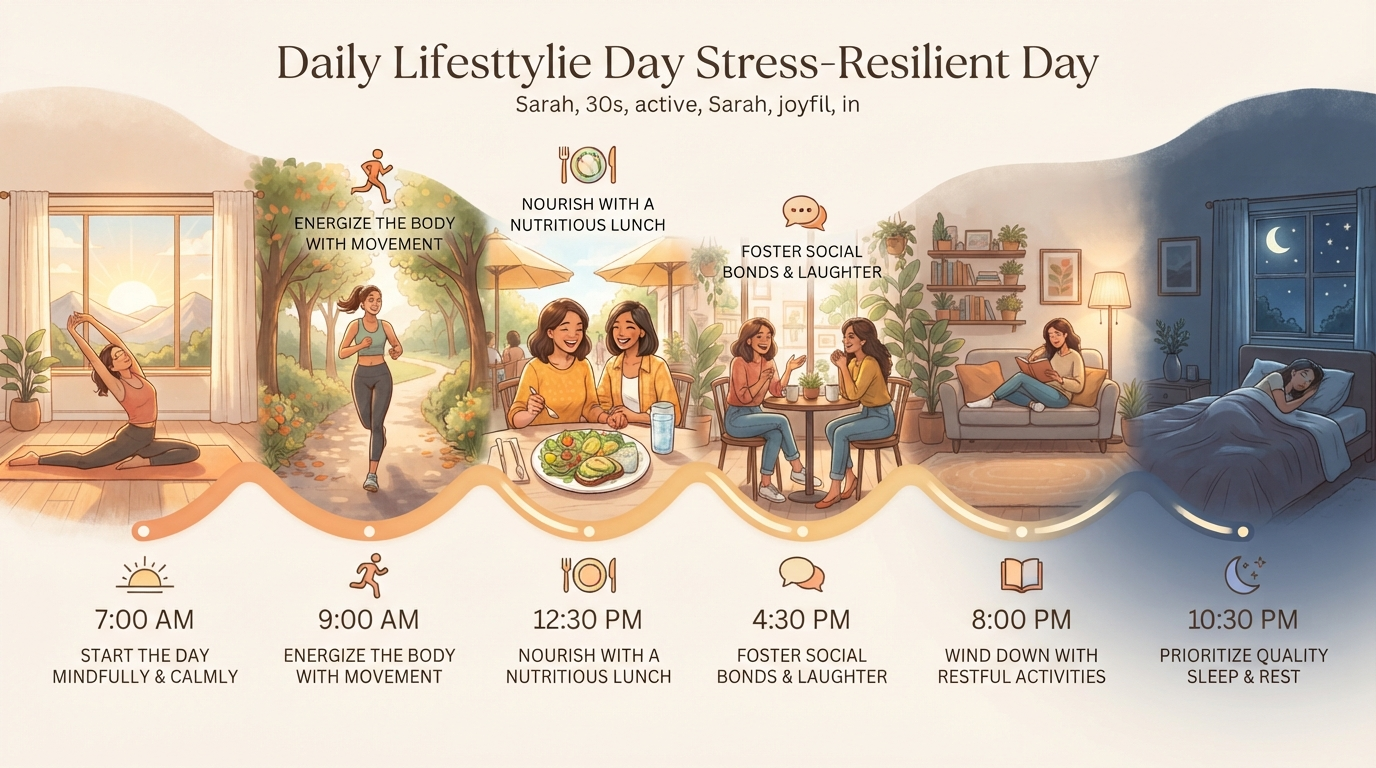
🧠 Morning - The Science
Sunlight exposure increases serotonin and regulates melatonin. Movement activates your parasympathetic nervous system (calm state). Proper nutrition prevents blood sugar crashes that trigger stress responses.
🎯 Main Benefit: Regulates cortisol naturally, improves mood, stabilizes energy, reduces anxiety throughout the day
🧠 Midday - The Science
Midday cortisol dip is natural, but dehydration blocks this reset. Social connection activates the vagus nerve (parasympathetic). Movement refreshes executive function and prevents attention collapse.
🎯 Main Benefit: Breaks stress accumulation, resets focus and energy, prevents afternoon crash, improves afternoon work quality
🧠 Evening - The Science
Evening movement lowers cortisol and increases serotonin. Warm water triggers parasympathetic activation and cooling. Blue light suppresses melatonin production—the hormone that makes you sleepy. Social connection is the most powerful nervous system reset available.
🎯 Main Benefit: Releases physical stress, signals sleep to your nervous system, improves sleep quality, prevents cortisol spikes at bedtime
🧠 Night - The Science
During deep sleep, your parasympathetic system is fully activated. Cortisol drops to baseline. Your glymphatic system clears stress metabolites from your brain. REM sleep processes trauma and emotions. Sleep deprivation keeps you in chronic threat mode—your nervous system never recovers.
🎯 Main Benefit: Allows nervous system full recovery, restores emotional resilience, stabilizes mood, improves decision-making and stress tolerance
Master Pattern: The 24-Hour Reset Cycle
Each part of your day serves a purpose in your nervous system recovery. Together, they create a complete reset cycle:
Morning resets circadian rhythm
Midday breaks stress accumulation
Evening releases physical tension
Night allows full nervous system recovery
Do these 4 things consistently = resilient nervous system. Skip even one = you're operating on fumes.
The Hard Truth
If you're checking off 4+ of these daily (sleep, movement, connection, sunlight, a stress tool, and nutrition), your nervous system can handle anything. But if you're only doing 1 or 2? Breathing techniques won't save you. You're operating on fumes.
Build this baseline FIRST. Everything else—the advanced techniques, the deep work—builds on top of this foundation.
Stress Management for Hospitality Workers
Your job isn't theoretical. It's real. 12-hour shifts. Rude customers. Being slammed. Money stress. Schedule chaos. Here's what actually works in your world.
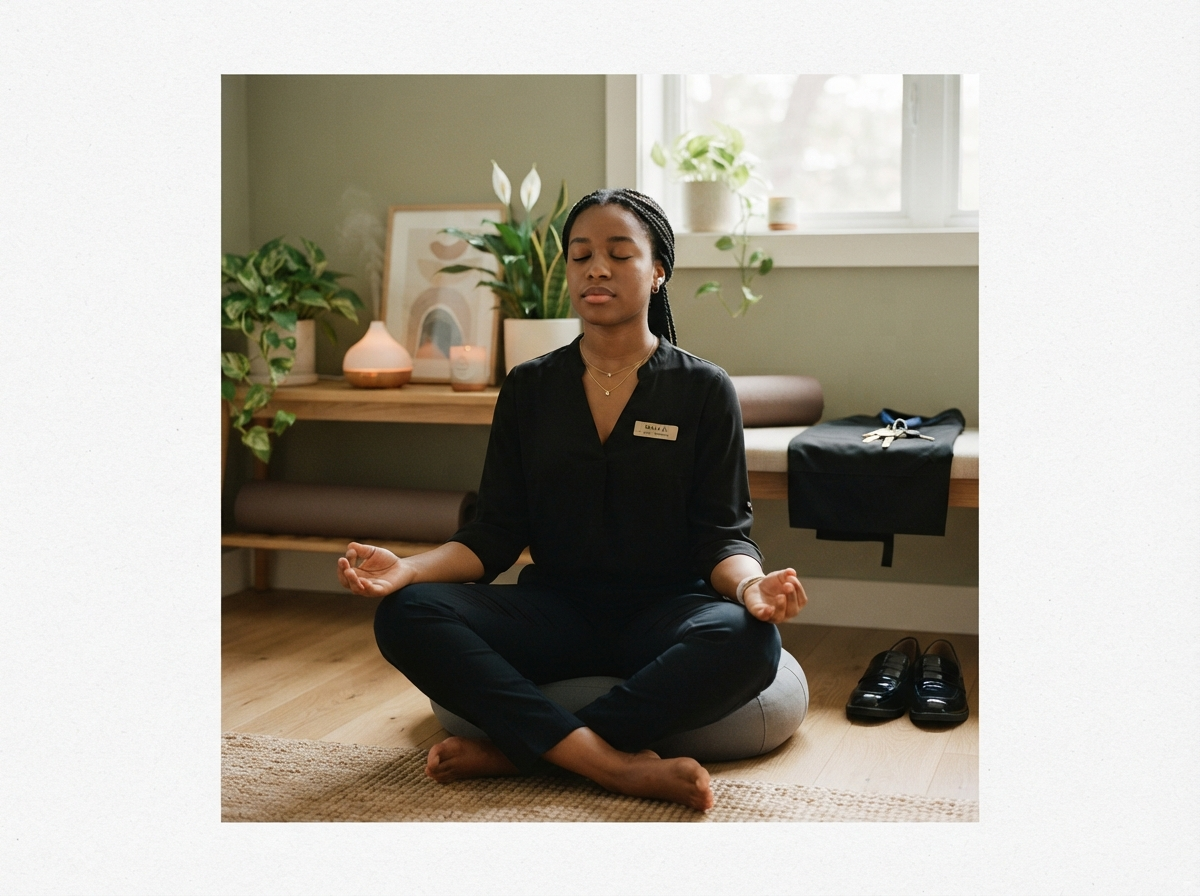
Before Shift
Prep your nervous system
Grounding Ritual (5 min)
- → Cold shower or splash cold water on face
- → 4 deep breaths + box breathing (4-4-4-4)
- → Eat something. Hydrate completely.
- → Mental visualization: You staying calm under pressure

During Service
Emergency resets in seconds
30-Second Reset
- → Step away for 30 seconds (bathroom, storage, outside)
- → Cold water on wrists + 4 deep breaths
- → Narrow your focus: One order. One task. One plate.
- → Quick word with a coworker: "This is a spike. It will pass."
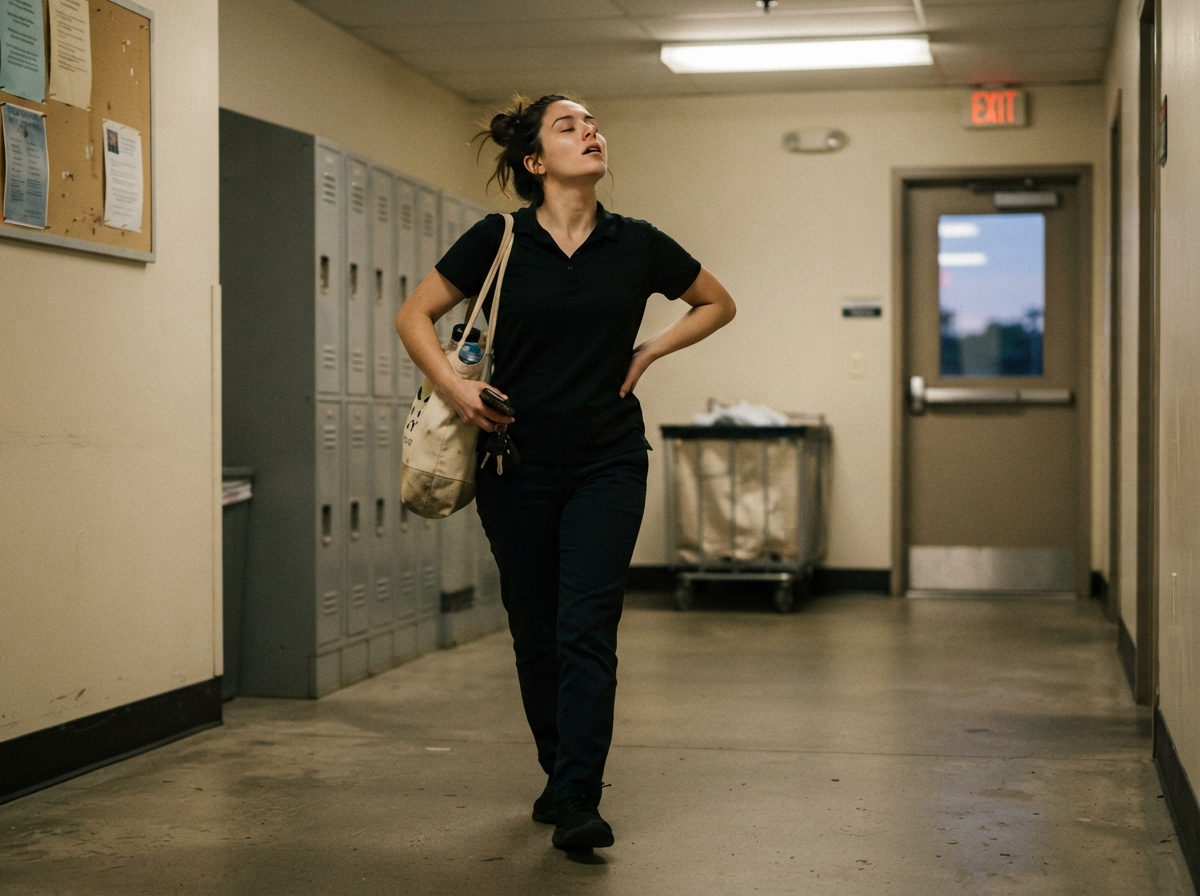
After Shift
Recovery protocol (critical)
Transition Ritual (15 min)
- → Don't go straight home stressed. Walk, drive, sit first.
- → Physical release: stretch, walk, shower, dance—anything
- → Call someone. Connect. Don't self-medicate.
- → Sleep protocol: No screens 30 min before bed.
Practice Real Scenarios Now
Every shift brings specific stressors. Learn what to do when it happens. Pick a scenario and see the real results of different responses.
Pick Your Real Shift Scenario
Pick a scenario above. Every shift has moments like these. Let's practice now so you're ready when they happen.
The Problem: You're Always In Crisis Mode
Your job keeps you in constant sympathetic activation. Your nervous system never fully downregulates. You're always in "threat mode" even on your days off. This is why self-medication feels necessary—it's the only relief you've found.
Without these practices, your nervous system has no way to recover.
The Solution: Strategic Recovery
You can't change your job. But you CAN regulate your nervous system. These practices (before, during, after your shift) keep you from burning out. They give your body a chance to recover. Over time, stress stops controlling you.
Small practices. Big results. Day after day.
Your Biggest Stressors: Real Solutions
😠 Rude Customers
Their mood is NOT about you. It's about their day, their stress, their stuff.
TOOL:
Box breathing + grounding. Say to yourself: "This is their stuff. I'm doing my job. Moving on." Stay professional. Don't internalize.
🔥 Being Slammed
You can't do everything at once. Panic makes it worse.
TOOL:
Tunnel vision. Forget the big picture. One order. One table. One task. Focus = control. You'll move faster this way.
📅 Schedule Anxiety
Unpredictability kills you. Logistics + money anxiety spike.
TOOL:
Problem-solve immediately. Call backup childcare. Text your manager. Get logistics handled. Control what you can control.
💰 Money Stress
Tips are down. Rent is due. Financial panic spirals.
TOOL:
Perspective + action. You made X today. Build a small budget. Focus on what you CAN control. One shift at a time.
Your Stress Mastery Path
Stress management is a skill. You don't master it overnight. Here's how to progress.
Week 1-2: Awareness & Grounding
Focus: Learn what stress feels like in your body. Practice one grounding technique daily.
- Use 5-4-3-2-1 grounding daily (morning or evening)
- Notice your stress level throughout the day (1-10 scale)
- Identify your personal stress signals (tight chest? racing heart?)
Week 3-4: Building Your Toolkit
Focus: Try multiple techniques. Find what works for YOUR nervous system.
- Test 2-3 breathing techniques (box breathing, 4-7-8, resonance breathing)
- Try cold water resets — notice how your body responds
- Experiment with movement (walk, stretch, yoga)
- Start keeping a simple log: what worked when
Week 5-8: Integration & Automaticity
Focus: Stop thinking about it. Make it automatic. Practice under low-stress conditions so it works under high-stress conditions.
- Use your top 2-3 tools daily (even when you don't feel stressed)
- Establish pre-shift and post-shift rituals
- Track: how much faster does your stress recover now?
Week 9+: Mastery & Teaching Others
Focus: You're now equipped. Teach someone else. Help a coworker. Build community resilience.
- Show a coworker your favorite grounding technique
- Notice: what triggers you now vs. what used to trigger you
- Shift focus: from managing stress to building resilience and prevention
⭐ Mastery Checkpoint
You've mastered stress management when:
- You notice stress rising and use a tool automatically
- Your recovery time drops from hours to minutes
- You have 2-3 tools you trust completely
- Stress doesn't control your decisions or push you toward substances
- You can teach someone else how to do this
Downloadable Quick Reference Cards
Print these. Laminate them. Keep them with you. No app needed.
Emergency Stress Reset (30 seconds)
Quick actions you can do at work, anywhere, anytime when stress spikes.
Breathing Techniques Reference
Step-by-step instructions for all 6 breathing techniques. When to use each one.
6 Grounding Techniques
Your physical anchoring tools. Use when you're spiraling or disconnected.
Daily Stress Tracker
Track your stress levels, triggers, and tools used. Build awareness and patterns.